
Cincinnati has more than two centuries of stories tucked beneath its streets, behind the walls of its historic buildings and throughout its oldest neighborhoods. Some are well documented. Others have been passed down long enough that history and legend have become difficult to separate.
From former burial grounds beneath Over-the-Rhine to an unfinished subway hidden below Central Parkway, the Queen City doesn’t need much help setting a spooky scene. Add generations of reported ghost sightings and local lore, and there’s plenty to explore once the sun goes down.
Whether you’re a believer, a skeptic or simply curious about the city’s stranger side, take a closer look at the history behind some of Cincinnati’s most enduring ghost stories.
The Stories Beneath Music Hall | Over-the-Rhine
With its dramatic architecture and more than a century of performances, Cincinnati Music Hall already looks like it belongs in a ghost story.
The landmark opened in 1878 beside Washington Park, on land with a complicated burial history. Over the years, renovations and construction in the surrounding area have uncovered human remains, adding another layer to the stories that have followed Music Hall for generations.
Performers, employees and visitors have reported unexplained sounds, shadowy figures and other unusual experiences inside the building. Those accounts have helped give Music Hall a reputation as one of Cincinnati’s best-known places for paranormal lore.
Visitors can occasionally get a closer look through official Music Hall Ghost Tours, which pair the building’s history with reported experiences while venturing into areas audiences don’t typically see.
The History: A Cincinnati landmark surrounded by more than a century of music, architecture and stories.
The Legend: Unexplained sights and sounds reported by people who have spent time inside.
Beneath the Streets: Over-the-Rhine
Some of Cincinnati’s most intriguing hidden spaces aren’t haunted houses. They’re remnants of the city’s brewing past.
Beneath parts of Over-the-Rhine, underground lagering cellars and tunnels remain from the neighborhood’s days as the center of Cincinnati’s booming beer industry. Before refrigeration, brewers relied on cool underground spaces to store beer, creating a world below the streets that many Cincinnatians pass over every day.
Today, guided tours offer opportunities to descend underground and learn about the people, breweries and buildings that shaped the neighborhood.
The dim passageways provide plenty of spooky atmosphere, but their history is fascinating enough without a ghost story attached.
Go Below: Take an underground tour and discover a side of Cincinnati most people never see.
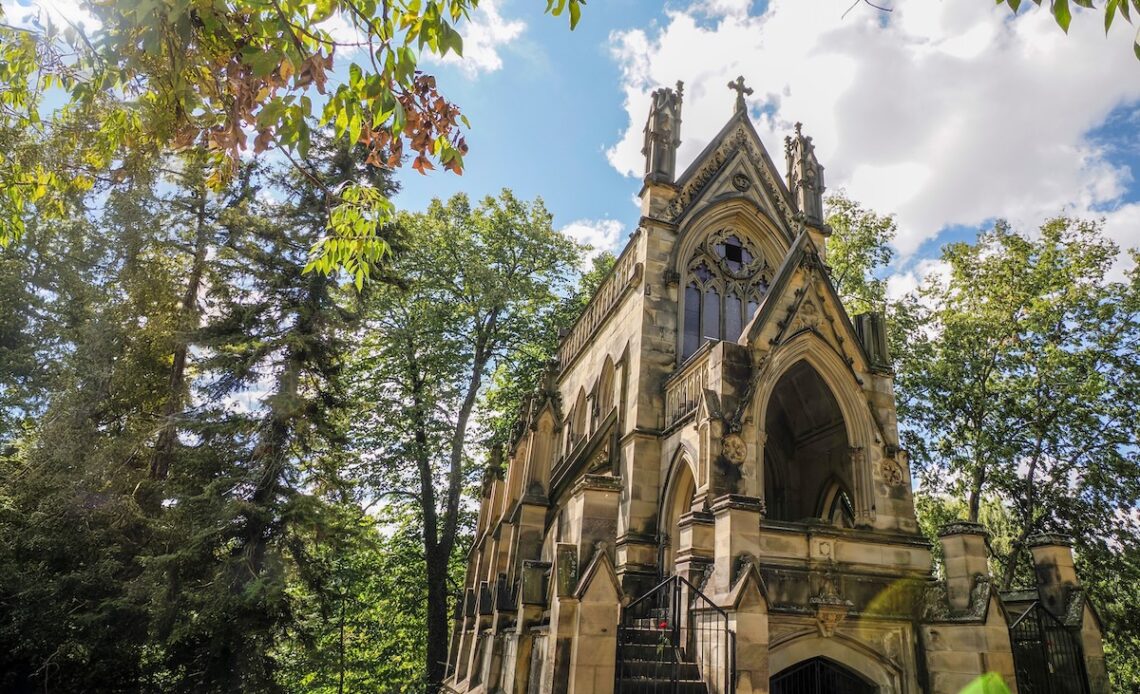
Beautiful, Historic & a Little Eerie: Spring Grove Cemetery & Arboretum
Not every cemetery needs a ghost story to be fascinating.
Chartered in 1845, Spring Grove Cemetery & Arboretum was created amid concerns about Cincinnati’s crowded urban burial grounds following recurring cholera epidemics. Its founders envisioned something entirely different: a peaceful rural cemetery shaped by trees, gardens, lakes and winding roads. Today, its historic landscape encompasses more than 700 acres and is designated a National Historic Landmark.
Walking through the grounds reveals elaborate monuments, mausoleums, mature trees and the final resting places of generations of Cincinnatians, including names closely connected to the city’s history.
Spring Grove welcomes visitors to explore the grounds and offers resources for self-guided visits along with tours and events throughout the year. Remember that it remains an active cemetery, so explore respectfully.
Look Closely: Cemetery monuments are filled with symbolism. Take your time exploring the architecture, inscriptions and details that tell stories about the people memorialized here.
Three Cincinnati Ghost Stories
Some Queen City legends have survived for generations. The history behind the places is real. What you make of the stories that followed is up to you.
The Lady in Green | Hilton Cincinnati Netherland Plaza
Opened in 1931, the Hilton Cincinnati Netherland Plaza transports visitors to another era with its elaborate Art Deco architecture and grand interior spaces.
Its best-known supernatural story belongs to the Lady in Green, an elegantly dressed figure reportedly spotted around the Hall of Mirrors and mezzanine. One version of the legend describes her as a woman searching for a husband who died during the building’s construction.
The identity and backstory of the Lady in Green are harder to establish than the history of the hotel itself, but the mysterious figure has nevertheless become one of Cincinnati’s enduring ghost stories.
The Legend: Keep an eye out for a flash of green around the hotel’s historic halls.
Things That Go Bump After Closing | Arnold’s Bar & Grill
A building with generations of history is bound to collect a few stories along the way, and Arnold’s Bar & Grill has plenty.
Over the years, staff and patrons have reported shadowy figures and unexplained knocks, bumps and clanks, particularly around the upper floors after hours. The stories have even attracted paranormal investigators curious about what might be making all that noise.
During the day and evening, of course, Arnold’s remains a lively Cincinnati institution. That contrast might be what makes its after-hours stories even more fun.
The Legend: When the last guests leave, some say the building doesn’t necessarily become quiet.
Ghosts on the River | Anderson Ferry
The Ohio River has always been more than a scenic backdrop to Cincinnati. Before the Civil War, it marked the boundary between the slave state of Kentucky and the free state of Ohio, giving river crossings enormous significance for freedom seekers.
Around Anderson Ferry, local lore tells of Fiddler’s Green, a mysterious green lantern and faint fiddle music said to appear along the river on foggy nights. Versions of the story connect the signals to people assisting freedom seekers across the Ohio.
Those details are better understood as local legend than established historical fact, but the story has endured alongside the ferry and the river’s very real place in regional history.
Listen Closely: According to the legend, a mysterious green light isn’t the only thing travelers have encountered. Some versions tell of fiddle music drifting across the water.
Take a Ghost Tour
Want to hear the stories after dark? Several Cincinnati tours combine local history with legends, reported hauntings and a little theatrical atmosphere.
For Classic Cincinnati Ghost Stories: Ultimate Queen City Is Haunted
American Legacy Tours’ Ultimate Queen City Is Haunted Tour explores the eerie side of Over-the-Rhine, including stories associated with Washington Park, Music Hall and the neighborhood’s former burial grounds.
It’s a good fit for anyone who wants recognizable Cincinnati landmarks with plenty of local history mixed into the ghost stories.
Best For: A classic Queen City ghost-tour experience.
For the Paranormal Investigator: Cincinnati Ghosts
Cincinnati Ghosts takes visitors on a walking tour through stories of tragedy, mystery and reported paranormal activity associated with historic Cincinnati locations.
For guests ready to lean all the way into the supernatural side of the evening, some experiences also offer opportunities to use ghost-hunting equipment.
Best For: Anyone who wants to do more than simply listen to ghost stories.
For Going Underground: Nightmare on Elm Street
If walking the streets isn’t spooky enough, go beneath them.
The Nightmare on Elm Street Walking Tour combines stories from Over-the-Rhine with a descent into historic pre-Prohibition brewery tunnels below the neighborhood. It’s a particularly Cincinnati combination of brewing history, underground exploration and ghost-tour atmosphere.
Best For: Adventurous visitors who want tunnels with their ghost stories.
Cincinnati’s Stranger Side
Some of the eeriest pieces of Cincinnati history don’t require any ghosts at all.
- There are graves beneath Washington Park. Before becoming one of Over-the-Rhine’s best-known gathering places, the land was used for several 19th-century burial grounds, including a public potter’s field. While remains were relocated over time, later construction projects have uncovered human remains and coffin fragments.
- Body snatching was a very real problem. Nineteenth-century medical schools needed cadavers for anatomical study, creating demand for so-called “resurrectionists” who stole recently buried bodies. One of Cincinnati’s most infamous cases came in 1878, when the body of John Scott Harrison, son of President William Henry Harrison and father of future President Benjamin Harrison, was discovered at the Medical College of Ohio shortly after his burial.
- An unfinished subway still sits beneath the city. Cincinnati began constructing a rapid-transit system in the early 20th century, including tunnels beneath what is now Central Parkway. Two miles of subway tunnels were completed by 1923, but the project ran out of money before tracks were installed. Central Parkway opened above the tunnels in 1928, while the subway below never carried a passenger.
Every Old City Has Stories
You don’t have to believe in ghosts to be fascinated by the stories they leave behind. Cincinnati’s haunted reputation is intertwined with very real pieces of its past, from forgotten burial grounds and underground tunnels to landmarks that have stood for generations.
Whether those old buildings, tunnels and riverbanks are actually holding onto something is another question. Sometimes the history behind the legend is interesting enough to make you look a little closer.
Looking for more ways to explore the Queen City? Discover more Cincinnati history, local favorites and hidden gems on Haus & Home.

