
I met Amy my sophomore year at the University of Cincinnati, when we were both new pledges at Kappa Alpha Theta. College gave us plenty of time together. Life afterward gave us less, with kids, careers and families pulling us in different directions, but we always made the effort. Even our moms became friends. Both single mothers. Both professional women. Both named Shirley.
Amy is a breast cancer survivor, and this October I asked if I could share her story. I came with a list of questions and a plan. I was going to find the caregiver in our community who made the biggest difference for her, and tell that story.
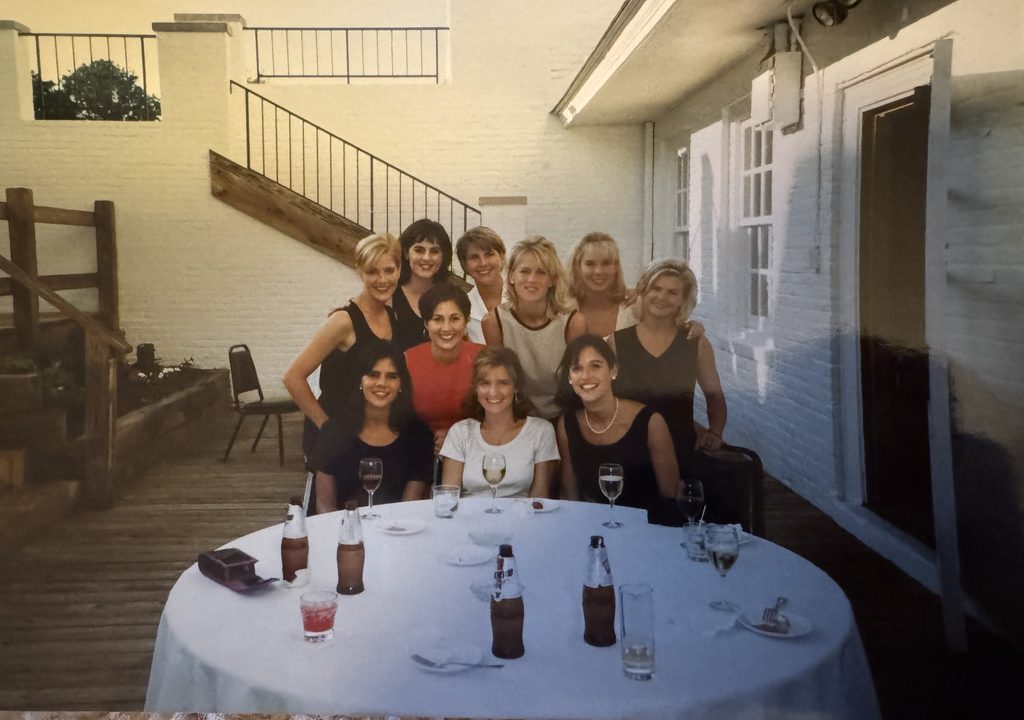
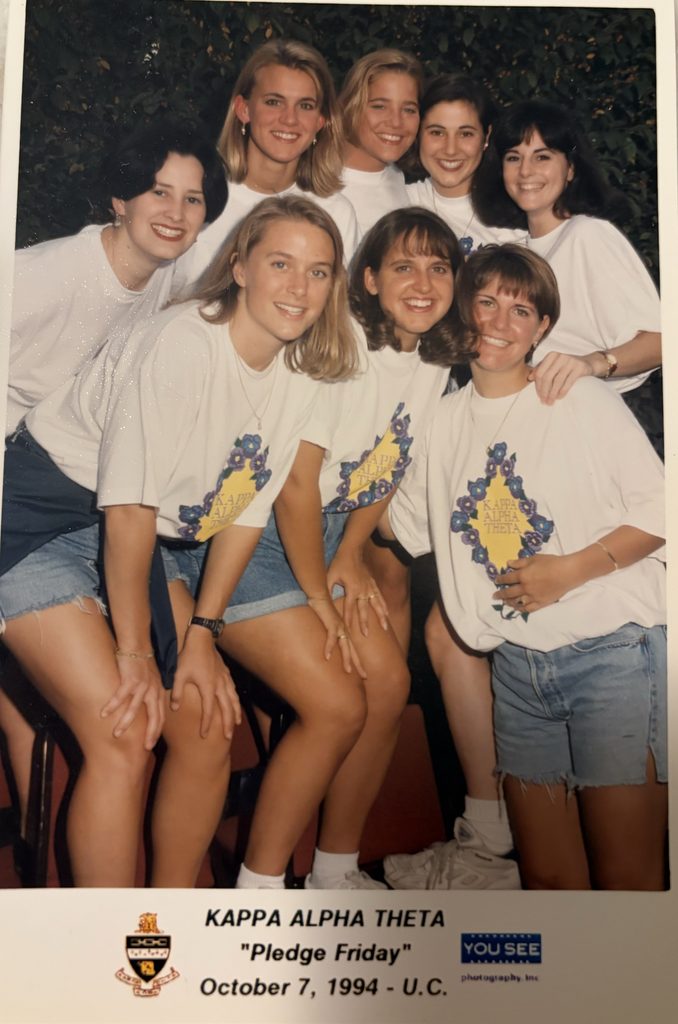
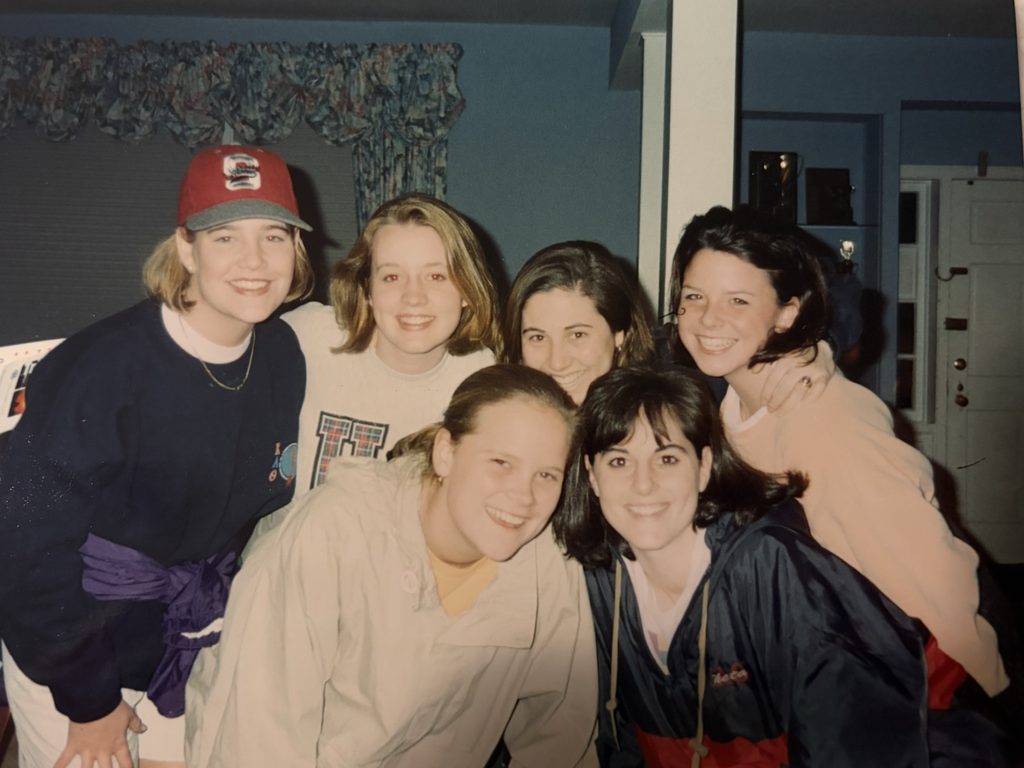
What she gave me was something else entirely. Every experience with cancer is different. This one is Amy’s.
The Pebble
It was a Sunday in August 2020. A week earlier, Amy had been on an outdoor getaway with her high school friends, all of them craving a break from Covid isolation. Now she was home, getting dressed for a walk. As she pulled on her sports bra, her arm brushed her breast, and she felt something small and hard. Like a pebble, she told me. She felt around and found two.
She knew they had not been there before.
Amy typed it into the group chat with those same friends: I just found lumps in my breast. At first, silence. No one knew what to say. Then one of them offered comfort with a statistic: 80% of breast tumors are benign. Everyone reassured her she would be fine.
That helped. Amy anchored to a feeling of it can’t be, and she had good reason. For two years she had been getting a 3D mammogram every six months, and the most recent one, that February, was clear. Still, it was a long Sunday, waiting to call her doctor on Monday.
Her doctor sent her straight for another 3D mammogram. It couldn’t see what her own fingers could feel. The pebbles went undetected.
It took an ultrasound to find them and a biopsy to confirm they were malignant. Then an MRI revealed two more tumors, and her doctors recommended a mastectomy.
Amy had the love and support of her husband, Todd, to steady her. But it was 2020, and she had to walk into every appointment, waiting room and exam room alone. When she was trying to hold it together in the MRI machine, wondering what else they would find, there was no one on the other side of the wall waiting to comfort her.
Even so, she found reasons for hope. The tumors were small. Her doctors were optimistic. She was sure the precautionary test of her lymph nodes would come back clear.
The day before her mastectomy, Amy was walking up to her daughter’s soccer game when her phone rang. It was the doctor’s office. Still tethered to it can’t be, she answered.
The cancer was in both lymph nodes they had tested.
How can this be?
She took her seat in the stands anyway. The game went on in front of her, and the tears came and didn’t stop. Amy told me it was one of the few times she was grateful to be wearing a mask. It kept her face hidden until halftime, when she walked out to her car to sit with the news and, eventually, share it with Todd.
Her surgery was the next morning. On the way to the hospital, Todd pulled over so she could throw up.
Then they kept driving.
A Gift
If I thought the first part of our conversation moved me, I had no idea what was coming next.
Amy told me that cancer itself was no gift. But some of what came with it was. She knows it doesn’t feel that way for everyone. It did for her.
Cancer was not the first hard thing Amy had faced. She had been through painful times before, times when she kept much of the struggle inside as she worked through it. It was isolating. But in that struggle, her faith took root.
So when cancer came, she already knew how to get through something hard. What she didn’t know was what it felt like to not do it alone.
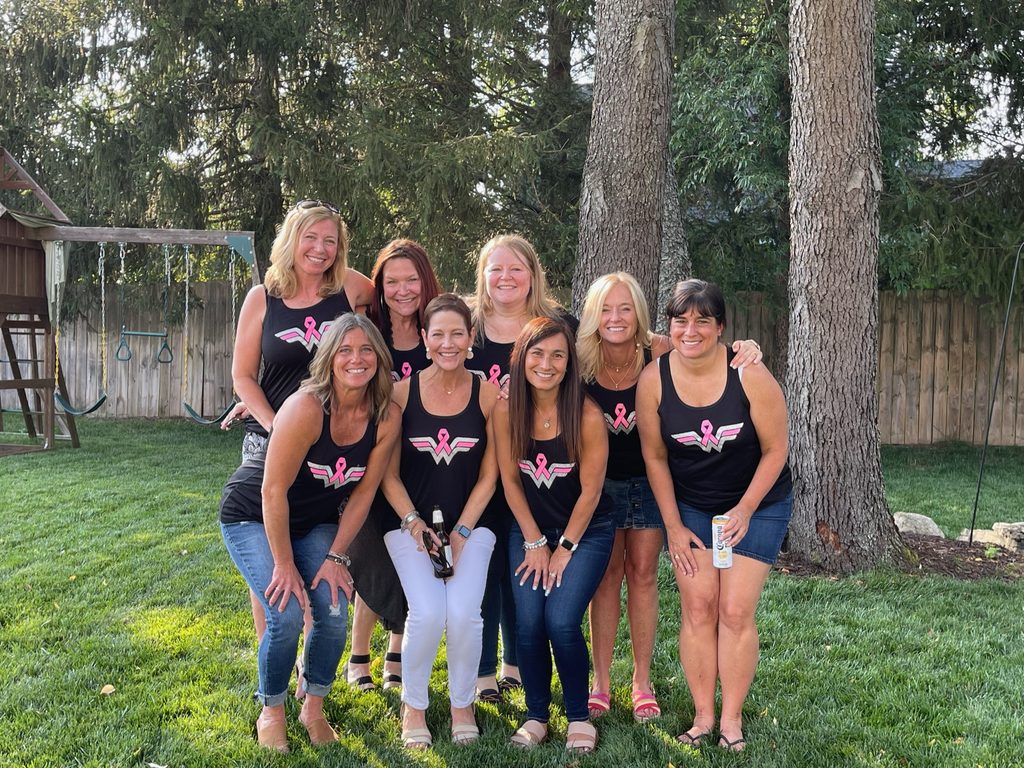
She found out fast. The day of that phone call, with surgery waiting in the morning, Amy texted her high school friend – and, right away, she showed up with a cold beer and took her for a drive, so Amy could cry and talk freely, away from the kids, who didn’t know yet.
After that, people kept coming: family, friends, neighbors and school acquaintances. There were cards, chocolates, small gifts, and a meal train that ran for months. Amy started out thinking they wouldn’t need all that food. She quickly learned the meals did more than make life easier. The love and kindness in every bite nourished them body and soul.
“I was floored,” Amy told me. “They seem like small things, but they meant the world.”
There were dark days, too, and plenty of them. While she was recovering from surgery and bracing for chemotherapy, Amy went down a few rabbit holes, trying to learn everything she could about what lay ahead. On a rainy Sunday in November, she read another breast cancer patient’s memoir from start to finish. At the end, she learned that the author’s cancer had come back, and that she did not survive it.
Amy was devastated. For the first time, she questioned the road in front of her. Why am I doing all of this if the cancer could just come back?
She confided in her longtime college friend, who didn’t hesitate. “Here’s what we’re going to do,” this friend told her. “Let’s have a ceremonial bonfire and burn that book. Give it all to God and trust that He’s got this for you.”
She made Amy promise: no more rabbit holes. Amy calls it a turning point. She let go of some of her fear and walked into chemotherapy trusting God’s plan.
It lasted six months, and at first it made her horribly sick, with daily radiation still ahead.
Every Saturday, her mom came over. Shirley helped with the laundry. She changed the sheets. She cleaned. She let Amy sleep.
Amy told me that she and her mom had been through some difficult times that left a wedge between them. Saturdays were her mom’s way of showing back up. And somewhere between the laundry and the naps, the two of them started to talk. They shared. They laughed. They cried. And they healed.
“It brought her back to me as a mom,” Amy said. She doesn’t believe it would have happened without the cancer.
Amy’s faith was already strong when all of this began. I could barely take notes as she shared the prayer that kept her afloat:
God, I know you are walking with me through this, and you are not giving me anything I can’t handle. If not me, who else? I would not have wanted my daughter, my sister or my friends to go through this. If you need me to do this, I can handle it.
I knew my friend was strong and brave. I just didn’t know.
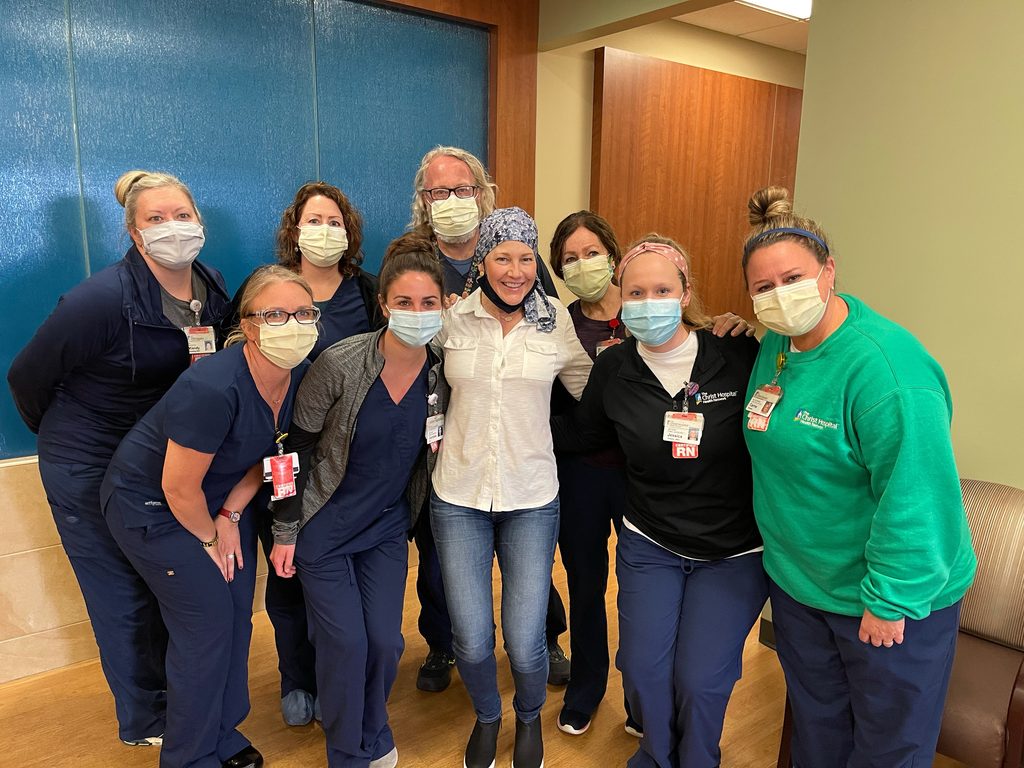
After
People tend to assume that once treatment ends and you are in remission, life returns to the way it was. “Nothing goes back to normal,” Amy said.
Her bones and joints have aged. The medication she takes is hard on her body, and she feels it. Working out is no longer optional. It is how she stays healthy and active.
Amy is different in other ways, too. She is more present and lives with more intention, giving her time to the people she loves and far less of it to things that don’t matter.
That shift began while she was still in chemo. It was January 2021, and so much of our country was angry and divided. Amy made a deliberate choice to share her diagnosis on Facebook. She wanted people to know how much love she was being shown, and that we are better than what divides us. We got this, she wrote. People she hadn’t talked to in years reached out to support her, and to thank her for her important message.
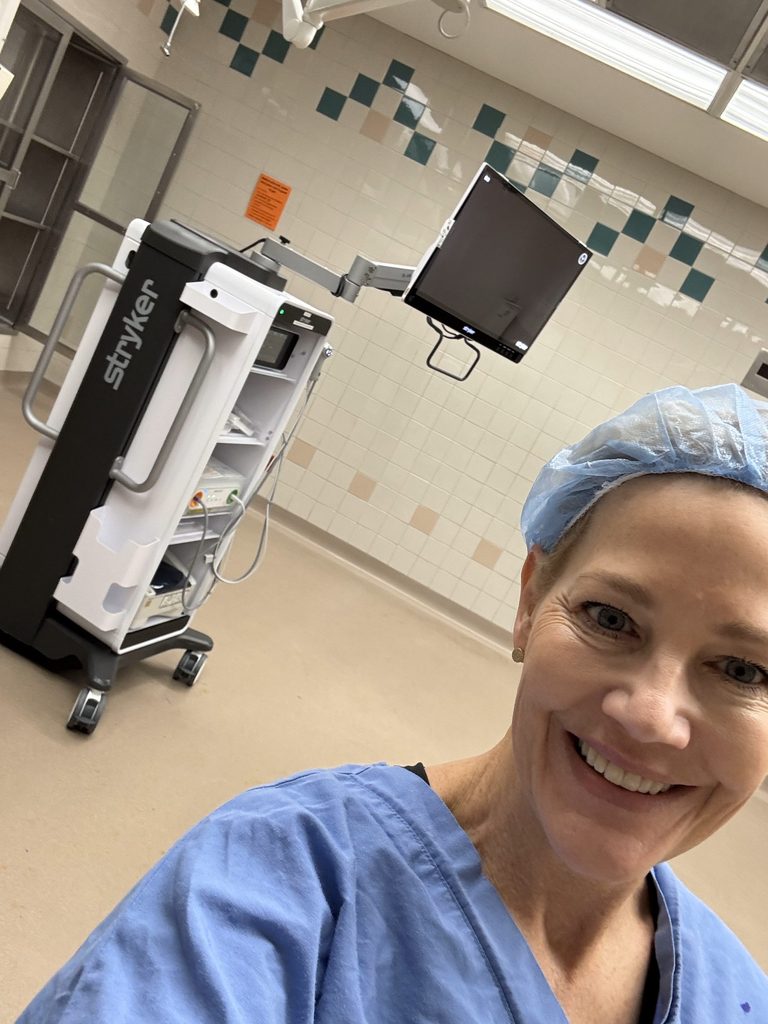
And then there is her work. Just before Amy found those two pebbles, she had lost her job to the pandemic. When treatment was behind her, a few opportunities came along that didn’t feel right, so she stepped back and searched with more purpose. That is when she found an opening with Stryker, the medical technology company, in its Breast Care division. Amy had some pharmaceutical experience, but on paper she was a long shot for such a complex role.
She had the one qualification that mattered most. She had lived it.
She knew she could learn the science and build the relationships. What excited her was the perspective she could bring to what patients go through physically, mentally and emotionally. She got the job. Today Amy consults with breast surgeons who perform mastectomies, the same surgery she was once so nervous about that Todd had to pull over.
She is a passionate advocate for breast cancer awareness, education and advancement. Stryker, you are lucky to have Amy on your team. We all are!
What Amy Wants You to Know
Before we finished, I asked Amy what I should have asked and didn’t. Her answer was for every woman.
Know your breasts. Amy admits she was never good about self-exams. She was good about screenings, and her screenings missed it. Her doctors told her that about one in five breast cancers don’t show up on a mammogram. Amy found hers because her arm happened to brush against it, and because she knew it had not been there before.
She worries most about younger women, who are being diagnosed more often and are not yet getting mammograms. Her advice is to check every month, so you know what is normal for you and notice when something changes. She also wants more of us asking about dense breast tissue, which she says is not talked about enough.
Mammograms matter. So does paying attention in between.
Amy also has a message for anyone standing on the outside of someone’s cancer, wondering what to do.
“I never really knew how to help someone going through cancer,” she said. “Now I realize it’s the small things. Someone going through it doesn’t know what they need. It’s just that people keep showing up.”
I walked into my conversation with Amy thinking I might uncover a local caregiver story. Many caregivers did make an impact on her. But the story that unfolded was a patchwork of community, faith, family and healing, with so many layers beyond the surgery and the chemo.
I’ve known Amy for over 30 years, and so much of this I didn’t know. I’m so glad I asked.
I love you, Amy. Thank you for trusting me with your story. You make our community better.
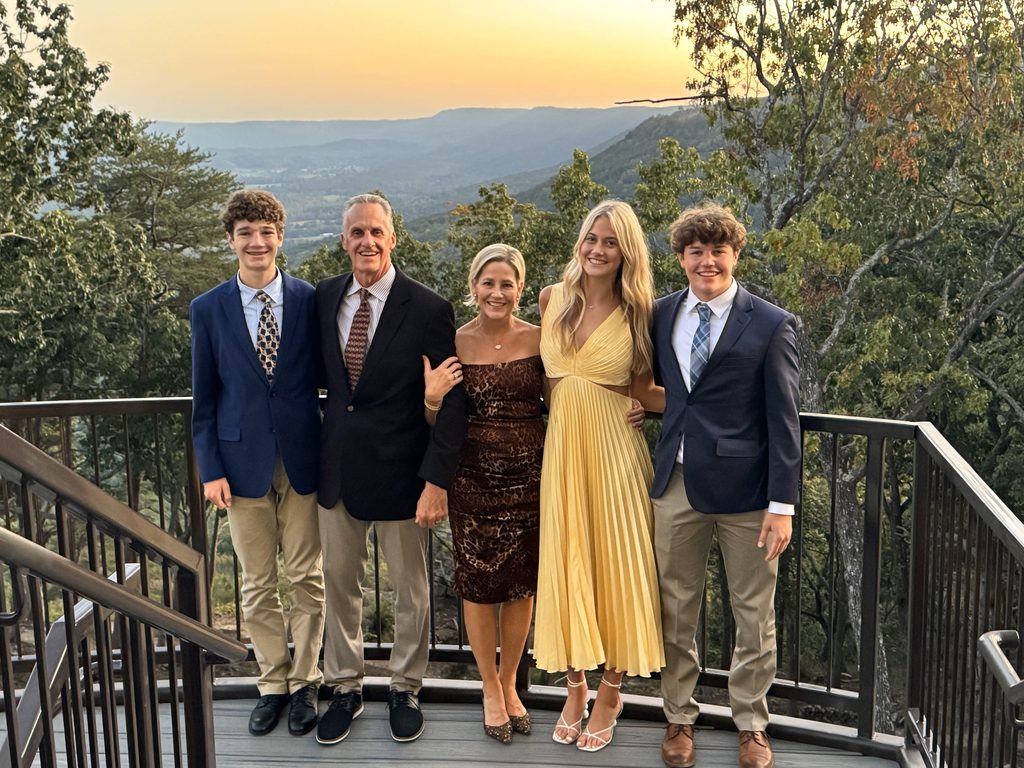
Photos courtesy of Lisa Daley
Check out more insights from your Neighborhood Guide, Lisa Daley.
